Lekythos
Χρονολόγηση475-425 π.Χ.
Date
475-425 BC
MediumΠηλός
Medium
Clay
Dimensions23.5εκ. × 4.8εκ. × 4.7εκ.
Dimensions
23.5 × 4.8 × 4.7 cm
ClassificationΠήλινα
Classification
Ceramics / Pottery
Αριθμός ΑντικειμένουΝΓ0460
Object Number
ΝΓ0460
ΠερίοδοςΚλασική περίοδος
Period
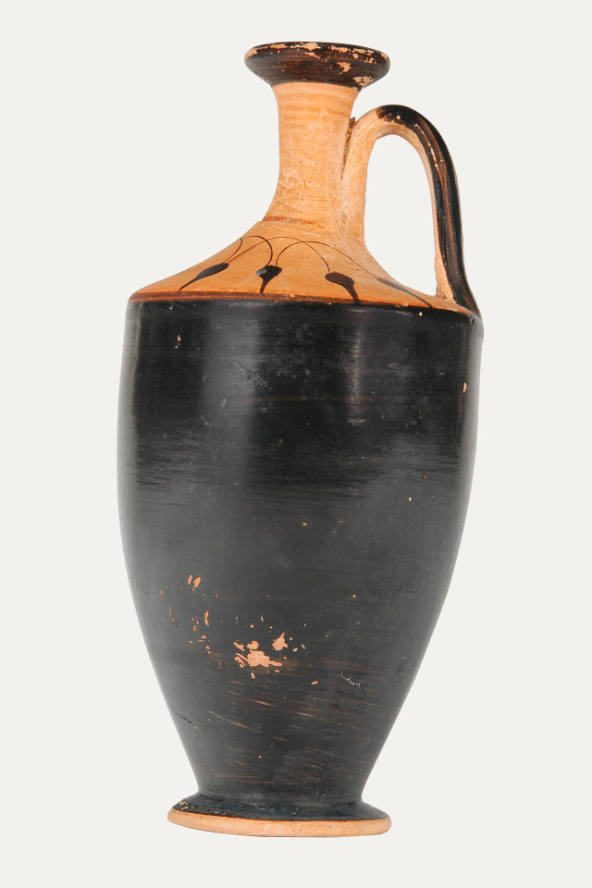
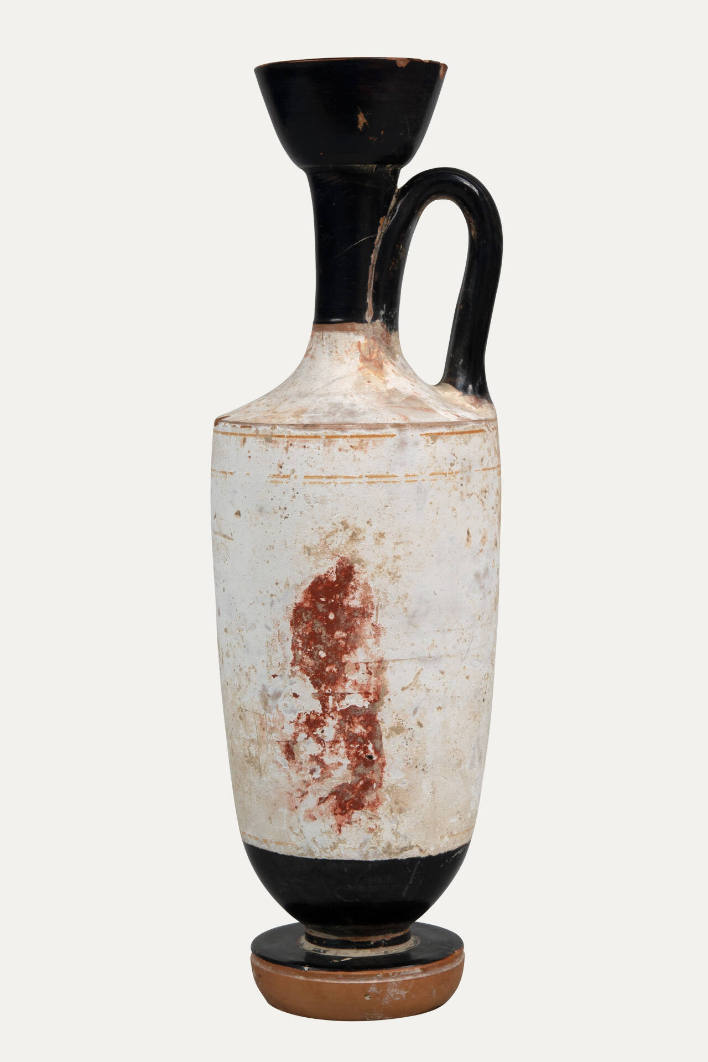
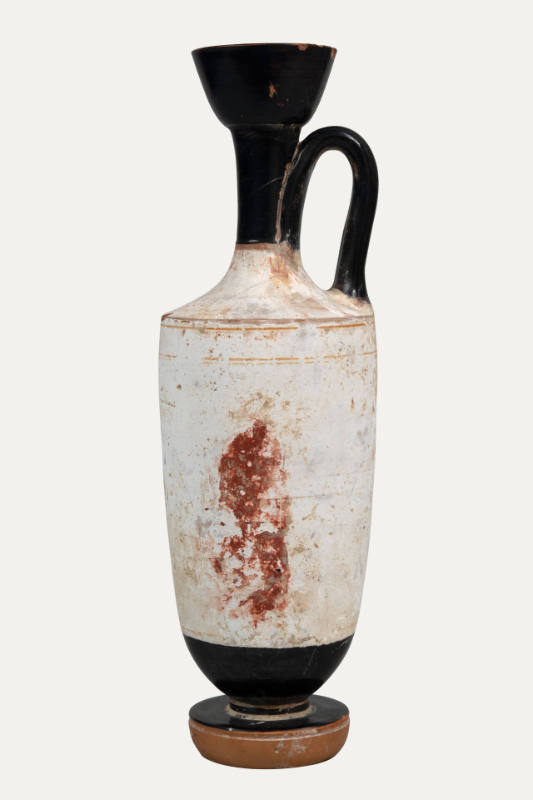
ΠεριγραφήΛευκή λήκυθος (αρωματοδοχείο, ελαιοδοχείο) με ίχνη ανθεμίων στον ώμο. Από την παράσταση του αγγείου διακρίνονται μόνο υπολείμματα μιας αδιάγνωστης μορφής, η οποία φορά κόκκινο ιμάτιο. Διακοσμητική ζώνη με μαίανδρο κοσμεί το πάνω μέρος της παράστασης. Το στόμιο, η λαβή, τμήμα του λαιμού, το κάτω μέρος του σώματος και η βάση του αγγείου τονίζονται με μελανό στιλπνό υάλωμα.Classical period
Description
Further InformationWhite lekythos (perfume vase, oil vase) with traces of palmettes on the shoulder. From the main scene on the body of the vase, all that remains is a small part of an unidentified figure clad in a red himation. A decorative band with a meander frames the scene on top. The mouth, part of the neck, the handle, the lower part of the body and the base of the vase are covered with black glaze.
White lekythoi appeared around 470 BC and continued to be produced exclusively for funerary use until 400 BC. The white ground was achieved by covering the surface of the vases with a very fine slip of white clay (named kaolin), which took on its distinctive hue after firing. Their iconography is usually associated with funerary themes and provides important information on burial customs and funerary monuments of the Classical period. Apart from the usual iconographic theme of the visit to a grave, the Attic white lekythoi often depict scenes from the gynaeconitis (gynaeceum, the women’s apartments in an ancient Greek house), farewell scenes or a warrior departing as well as scenes from the family life of the deceased.
Οι λευκές λήκυθοι εμφανίζονται γύρω στο 470 π.Χ. και χρησιμοποιούνται αποκλειστικά σε ταφικές τελετές έως το 400 π.Χ. Το λευκό βάθος οφείλεται στην επάλειψη της επιφάνειας του αγγείου με ένα πολύ λεπτό στρώμα λευκού πηλού (με καολίνη), που έπαιρνε τη χαρακτηριστική απόχρωση μετά την όπτηση (ψήσιμο). Η εικονογραφία τους σχετίζεται συνήθως με νεκρικά θέματα και παρέχει σημαντικές πληροφορίες για τα ταφικά έθιμα καθώς και για τα ταφικά μνημεία της Κλασικής εποχής. Εκτός από το συνηθισμένο εικονογραφικό θέμα της «επίσκεψης στον τάφο», συχνά στις αττικές λευκές ληκύθους εικονίζονται σκηνές που εκτυλίσσονται στον γυναικωνίτη, παραστάσεις αποχωρισμού ή αναχώρησης πολεμιστή, αλλά και στιγμιότυπα από την οικογενειακή ζωή των νεκρών.
ACTIVITIES
Discover More