Figurine
ΧρονολόγησηΤέλη 6ου αι. π.Χ.
Date
Late 6th c. BC
MediumΠηλός καστανός ανοικτός
Medium
Light brown clay
Dimensions8.7εκ. × 8.5εκ.
Dimensions
8.7 × 8.5 cm
ClassificationΠήλινα
Classification
Ceramics / Figurines
Αριθμός ΑντικειμένουΑΠ(ΕΑΙΑΣ)0026
Object Number
ΑΠ(ΕΑΙΑΣ)0026
ΠερίοδοςΑρχαϊκή περίοδος
Period
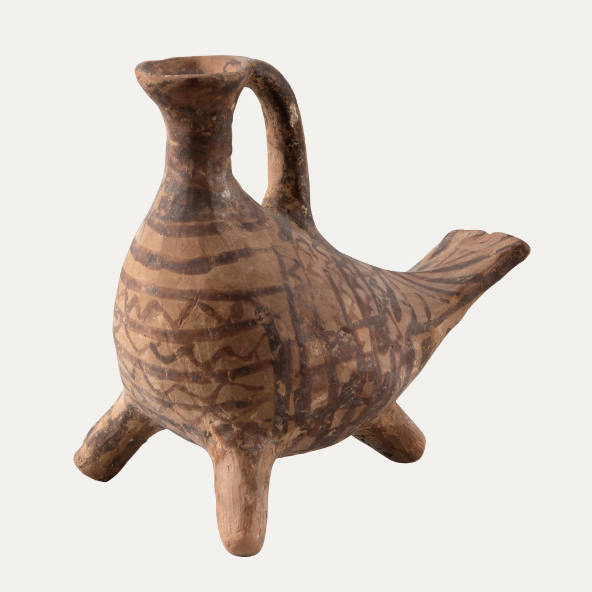
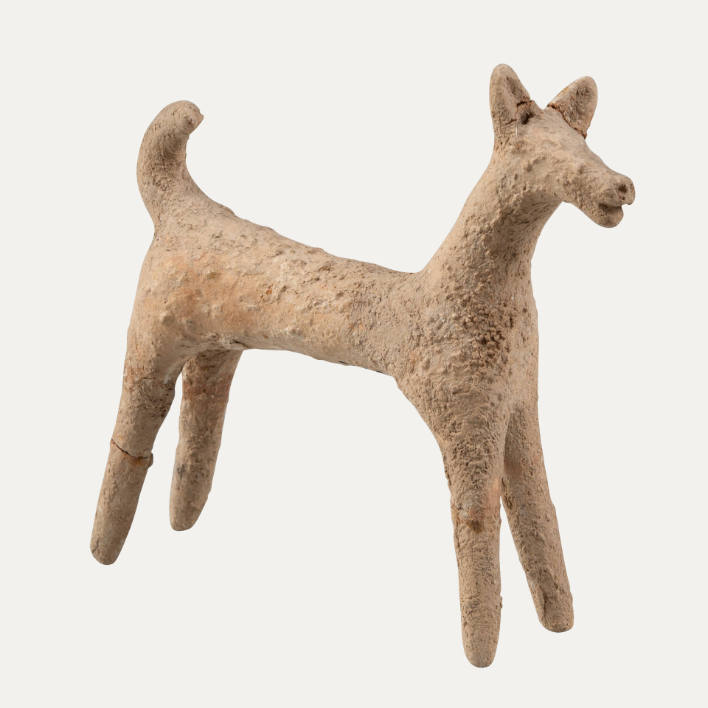
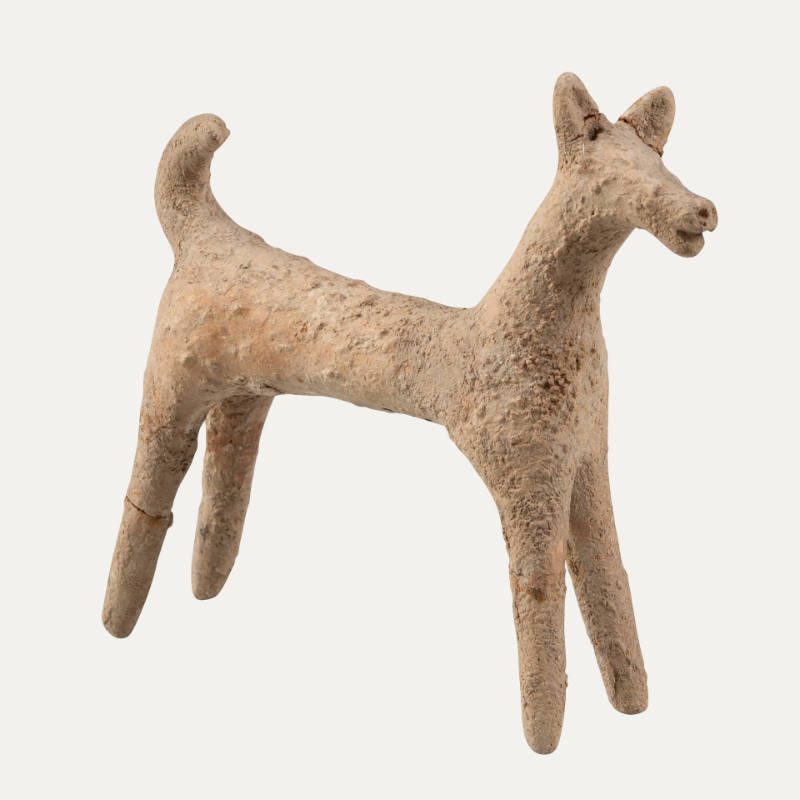
ΠεριγραφήΕιδώλιο σκύλου, με κυλινδρικό σώμα και πόδια. Η ουρά του αναδιπλώνεται
και στρέφεται προς τα εμπρός.Archaic period
Description
Further InformationFigurine of a dog, with cylindrical body and legs. The tail folds up and
turns forward.
Dog figurines appear in coroplasty in the second half of the 6th c. BC
and their production continues until the end of the Hellenistic period (323-31
BC). Dogs, faithful companions, were a favorite subject in ancient Greek art as
they were depicted in hunting scenes accompanying their masters or in play
scenes with young children. It is possible that the illustrated figurine was a
toy. “athyrmata” were toys in the form of animal likenesses and were
particularly popular with children. Dogs, horses, birds, ducks, pigs, turtles,
geese, ducks and turtles brought to life the magical world of children. They were usually made of wood
or clay.
Eιδώλια σκύλων εμφανίζονται στην κοροπλαστική στο β’ μισό του 6ου αι. π.Χ. και η παραγωγή τους συνεχίζεται μέχρι το τέλος της Ελληνιστικής περιόδου (323 - 31 π.Χ.). Τα σκυλιά, πιστοί σύντροφοι του ανθρώπου, αποτελούν άλλωστε ένα αγαπητό θέμα της αρχαίας ελληνικής τέχνης καθώς απεικονίζονται σε σκηνές κυνηγιού να συνοδεύουν τους κυρίους τους ή σε σκηνές παιχνιδιού με μικρά παιδιά. Πιθανόν το εικονιζόμενο ειδώλιο να αποτελούσε πήλινο παιχνίδι. Τα «αθύρματα» ήταν παιχνίδια με τη μορφή ομοιωμάτων ζώων και ήταν ιδιαίτερα αγαπητά στα παιδιά. Σκυλιά , άλογα, πουλιά, πάπιες, γουρούνια, χελώνες, χήνες ζωντάνευαν τον μαγικό κόσμο των παιδιών. Τα ομοιώματα αυτά ήταν συνήθως ξύλινα ή πήλινα.
ACTIVITIES
Discover More